Sagar Adani outlines 50 GW renewable energy vision at London dialogue
-
Sagar Adani calls for faster electrification to boost global energy security
-
Adani Green hosts inaugural energy dialogue at London Climate Action Week
-
Adani Green partners with ETC to accelerate clean energy transition investments
London/India, 27 June 2026: Mr. Sagar Adani, Executive Director, Adani Green Energy Limited (AGEL), today called for faster electrification to strengthen energy security and support economic growth, saying renewables integrated with storage will be critical to delivering reliable, affordable and round-the-clock clean power.
Mr. Adani was speaking at the inaugural Adani Green Energy Dialogue, hosted by Adani Green Energy Limited (AGEL) in partnership with the Energy Transitions Commission (ETC) at the Science Museum, London, during London Climate Action Week. The dialogue brought together policymakers, investors, business leaders and climate experts to discuss the policy, investment and infrastructure needed to accelerate the clean energy transition.
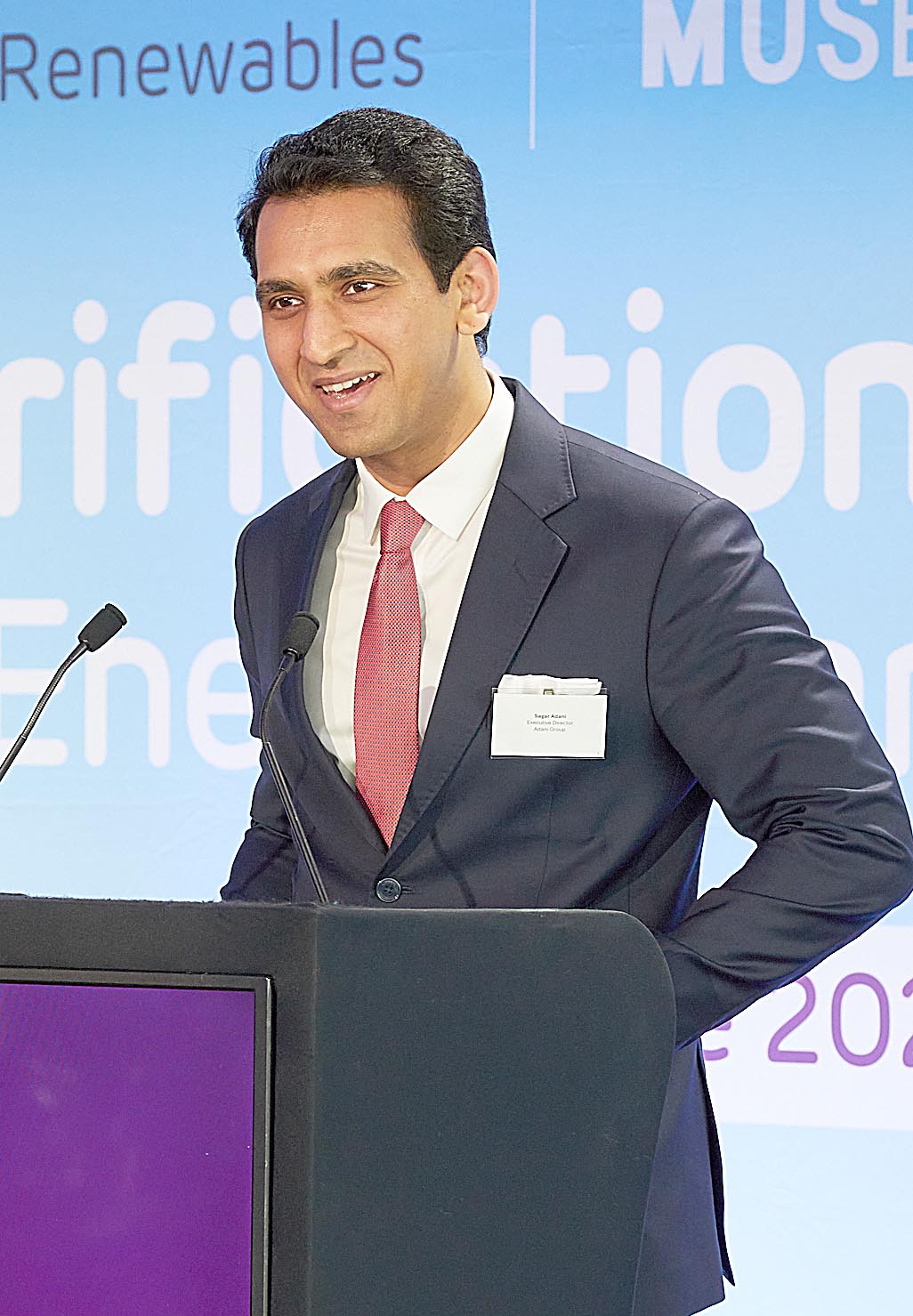
Addressing the gathering, Mr. Adani said: “Energy security, affordability and sustainability are among the defining challenges of our time. Electrification is emerging as one of the most effective pathways to address all three. For countries seeking resilient growth and greater energy independence, accelerating electrification is no longer an option but an imperative.”
He added: “Renewable energy reaches its full potential when paired with storage technologies such as Battery Energy Storage Systems (BESS) and Pumped Storage Projects (PSPs). They make clean power reliable, affordable and available round the clock. At Adani Green, we are bringing this vision to life as we advance towards 50 GW of renewable energy capacity by 2030, led by the world’s largest renewable energy plant at Khavda, Gujarat, where clean energy is being integrated with large-scale storage.”
Held during London Climate Action Week, one of the world’s largest independent climate events, the dialogue reflected the growing importance of international collaboration in advancing climate action, encouraging policy innovation and mobilising investment for the energy transition.
The programme featured two high-level sessions chaired by Lord Adair Turner, Co-chair, ETC; and Mr. Nigel Topping, Co-founder, Ambition Loop and Chair of the UK Climate Change Committee. Participants included senior leaders from Octopus Energy, Schneider Electric, the Climate Bonds Initiative, the Green Finance Institute and the Adani Group, bringing together expertise across energy, finance, technology and sustainable infrastructure.
Speaking at the dialogue, Lord Turner said: “To build zero emission economies and limit global warming to manageable levels we need to pull many levers – but by far the most important is clean electrification – electrifying as much of the economy as possible and decarbonising electricity generation as far as possible. The good news is that electrification is already economic in many sectors such as road transport, building heating and low temperature industrial heat; but also that technological progress is increasingly making it possible to electrify even the high temperature heat demands seen in heavy industry.”
Mr. Topping said: “Whilst investment in decarbonising power systems continues to accelerate, the real economic and climate benefits come from electrifying parts of the economy still largely powered by fossil fuels. A clear understanding of how technology costs continue to fall and of the role of flexibility in a modern grid are keys to unlocking the large amounts of investment required.”
Discussions focused on two priorities: accelerating electrification and mobilising investment in renewable energy, storage and modern grid infrastructure.
Against the backdrop of intensifying heatwaves across Europe, Asia and North America, rising cooling demand and increasing pressure on power systems, participants noted that resilient electricity systems will be essential to sustaining economic growth while reducing dependence on fossil fuels.
As economies become increasingly digital and energy-intensive, reliable access to clean electricity will play an even greater role in supporting sectors such as artificial intelligence, advanced manufacturing, data centres and digital infrastructure. Rapid growth across these sectors is expected to drive the next wave of global electricity demand.
Participants agreed that meeting this demand sustainably will require long-term policy certainty, sustained investment and accelerated deployment of renewable energy, storage and transmission infrastructure. They noted that storage will play a critical role in delivering reliable, affordable and round-the-clock clean power while enabling higher penetration of renewable energy.
The Adani Group has committed more than US$100 billion towards the energy transition and related infrastructure, one of the world’s largest private-sector commitments of its kind. Alongside renewable energy, the Group continues to invest in transmission, energy storage, green hydrogen, digital infrastructure and next-generation industrial ecosystems to support the transition to a low-carbon economy.
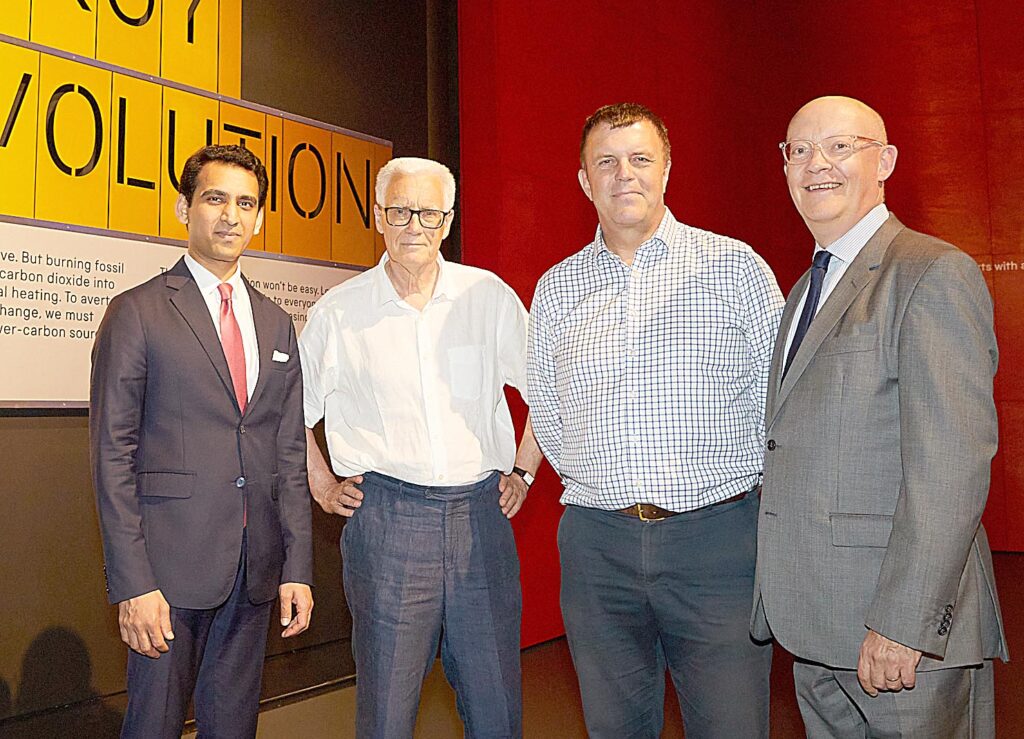
The event concluded with a visit to Energy Revolution: The Adani Green Energy Gallery at the Science Museum, London, supported by AGEL. Through immersive exhibits and interactive experiences, the gallery explores the technologies and innovations driving the global transition to cleaner, low-carbon energy while helping visitors understand the choices shaping tomorrow’s energy systems. Since opening in March 2024, the gallery has welcomed more than one million visitors, reflecting growing public engagement with the science and solutions driving the energy transition.
Earlier this week, at the Adani Group’s Annual General Meeting (AGM), Chairman Mr Gautam Adani reaffirmed the conglomerate’s commitment to meeting India’s growing energy needs through a diversified energy portfolio spanning renewable energy, green hydrogen, energy storage, transmission, digital infrastructure and nuclear energy. He also announced plans to develop up to 10 GW of nuclear power capacity as part of the Group’s diversified energy portfolio, with nuclear complementing renewables and storage to deliver reliable, affordable and low-carbon electricity at scale.